ChatGPT Merges Chat and Work: One Shared Usage Limit in December
OpenAI is merging Chat and Work in ChatGPT, and from December Plus, Pro and Business plans share one usage allowance. How should teams plan capacity and budget?
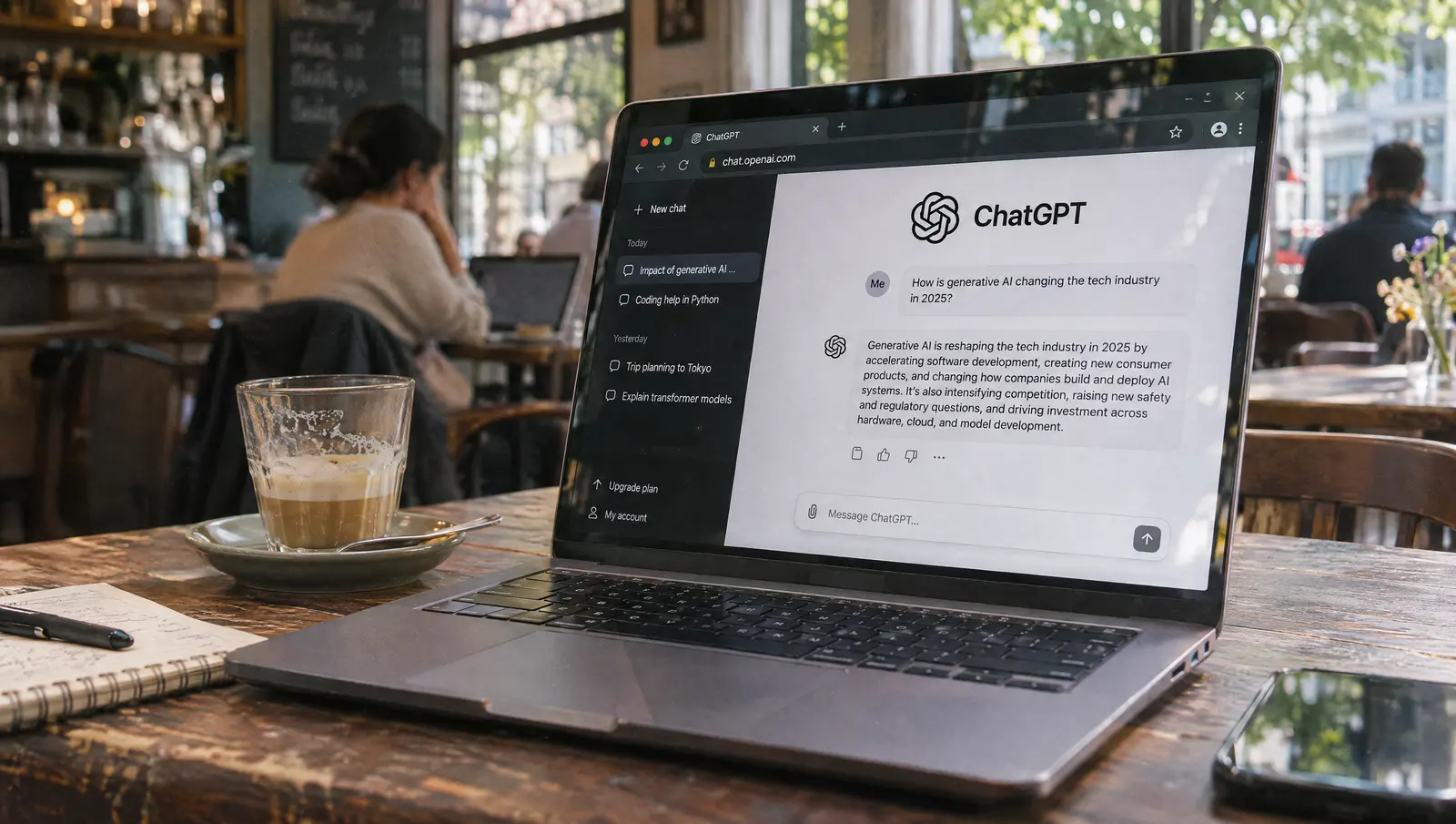
If your team uses ChatGPT, the math changes in December. OpenAI is merging the Chat and Work tabs into a single experience, and usage moves into one shared pool along with it. It doesn’t look like a new feature, but it directly affects capacity planning for any team that relies on ChatGPT for content, decks or code.
How will ChatGPT’s shared usage limit work?
On November 24, OpenAI product lead Thibault Sottiaux posted on X that the combined Chat and Work experience was starting to roll out to a small group of Pro users so the company could gather feedback. OpenAI had announced the merger in an email to users in early November. According to TechCrunch, the email described going from an idea to having ChatGPT build a website or a presentation, all in one place, while Codex stays a separate experience in the desktop app.
The details on limits are in OpenAI’s help article:
- Starting in December, Plus, Pro and Business plans will share one usage allowance across ChatGPT and Codex.
- Usage is measured in tokens. How much you use depends on the model you pick and the size of the task; more advanced models and complex tasks use more.
- Instant chats won’t draw from the allowance.
- You’ll be able to see your combined remaining usage and reset times under Settings → Usage.
- When you hit the limit, you can wait for the reset, upgrade your plan or buy credits.
A company spokesperson told TechCrunch that most users won’t have to wait for resets more often than they do now, while a small share of the heaviest users may hit their limits sooner. On social media and OpenAI’s community forum, some subscribers worried they’d pay the same fee for less access to advanced models.
How does this affect team plans and budgets?
For many teams, a ChatGPT subscription has been a fixed cost: you pay the monthly fee and don’t think about it. With a shared meter, it starts to look more like a capacity package. If a marketing team building decks and a developer updating the site through Codex both work off the same plan, the allowance can run out sooner than expected during a busy launch week.
How work gets split changes too. Since Instant doesn’t touch the meter, keeping short questions and light tasks like proofreading in Instant protects the share you set aside for advanced models. A long deck or a multistep research task uses far more.
According to OpenAI’s credits article, Plus and Pro users can keep using eligible features with credits once the plan allowance runs out. Credits are bought under Settings → Usage, and automatic reload is available on some accounts.
Anthropic is heading the same way: TechCrunch notes that the company combined Claude’s chat and Cowork products in one interface in September. Anthropic’s Claude Duet agent also shares the plan’s usage limits, with background work drawing from the same allowance. We think chat and agent work drawing from one pool will soon be the industry default.
What stays the same for pricing, Codex and deadlines?
- No price change has been announced; what’s changing is how the allowance is shared.
- Only Chat and Work are merging. Codex stays a separate experience in the desktop app and only shares the allowance.
- OpenAI hasn’t published a message count or a percentage, so you’ll need to track the impact on your own usage screen.
- A tool hitting its limit doesn’t move a deadline you promised a client. For dated work, write down in advance how you’ll carry on if your main tool stops.
We covered the cost side of these models in our GPT-6 Sol and Luna post, and agents in ChatGPT in our Dots post.
How should teams plan their usage before December?
- Identify who uses the same plan both for decks and for coding in Codex; they will drain the shared pool fastest.
- Check Settings → Usage regularly in the first weeks of December and note which weeks run heavy.
- Move quick questions and proofreading to Instant.
- Set an extra credit budget in advance for launches and campaign periods.
Which work goes to AI, and which stays with the team?
Drafting a campaign page or a short promo video in ChatGPT has become easy; a site that fits the brand and can be maintained for years still takes a planned process. On Webflow web design and motion graphics projects, we decide at the start what AI will speed up and what stays with the team.
FAQ
When does ChatGPT’s shared usage limit start?
In December. If you’re on Pro, you may see the combined experience earlier.
Which plans are affected?
Plus, Pro and Business. On these plans, usage in Codex will come out of the same allowance as ChatGPT.
Do Instant chats count toward the limit?
No. A company spokesperson told TechCrunch that users who run out of their allowance can keep using Instant.
If the new limit squeezes your content calendar, we can take on part of the copy and visual production; write to us.
Sources
- Understanding ChatGPT and Codex usage limits · OpenAI Help Center
- Using credits for flexible usage in ChatGPT personal plans · OpenAI Help Center
- Thibault Sottiaux, post on X (November 24, 2026) · X
- OpenAI says heavy ChatGPT users may hit limits sooner as it merges Chat and Work · TechCrunch
- OpenAI is finally merging ChatGPT's Chat and Work tabs · TechCrunch
- Introducing Claude Duet · Anthropic