MAGI-2 Is Out: 30-Second Videos With Sound at $4.80 a Minute
Sand.ai's MAGI-2 generates up to 30 seconds of 1080p video with sound for $4.80 a minute. Here's what it changes for your video budget and brand consistency.
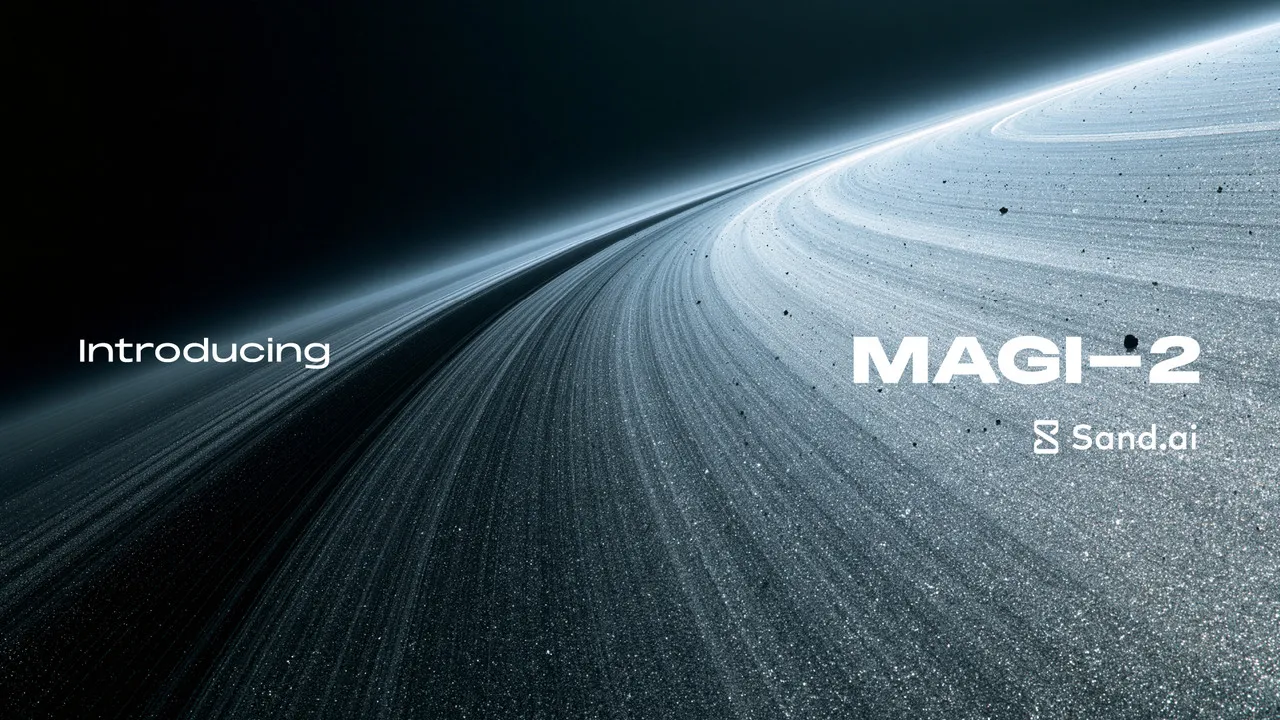
Sand.ai has announced MAGI-2, its flagship video model. It generates up to 30 seconds of 1080p video, with dialogue, sound effects, ambience and music coming from the same model. It entered Artificial Analysis’s Image to Video leaderboard at number one, and the published price puts 1080p video with audio at $4.80 a minute. If you produce video, that means two things: testing gets cheaper, and you can pass more references in one request. The top spot comes from a user preference vote and doesn’t measure brand quality.
What does MAGI-2 offer, and what does it cost?
On November 24, 2026, Sand.ai introduced MAGI-2. MAGI-2 Preview, released as open source in August 2026, was a research release; the new model is far larger. Here is what the company announced:
| Feature | MAGI-2 |
|---|---|
| Parameters | 480B total, about 28B active (Preview: ~114B / ~6B) |
| Pre-training data | 4T tokens, about 3× the Preview’s |
| Length | Up to 30 seconds |
| Resolution and frame rate | 1080p (via a dedicated upscaler), 25 fps |
| Audio | Native: dialogue with lip-sync, sound effects, ambience, music |
| Aspect ratios | Six options |
| References | Up to 20 per request: 10 images, 5 videos, 5 audio clips |
| Control | Timeline and shot-cut control, targeted edits to existing video |
| Open source | “Coming”; no date for the weights or technical report |
The model uses a mixture-of-experts (MoE) architecture, meaning only part of the total parameters run on each generation. In the Artificial Analysis Video Arena v2.1 results Sand.ai shared, the average Elo across four tasks (text-to-video and image-to-video, with and without sound) rose from 998.5 for the Preview to 1150.3 for MAGI-2.
According to Artificial Analysis, MAGI-2 entered its Image to Video leaderboard in first place, and 1080p video with audio costs $0.08 per second, or $4.80 per minute. Dreamina Seedance 2.5 costs $34.12 per minute, which makes MAGI-2 roughly 7.1 times cheaper. A 30-second clip comes to $2.40. Sand.ai’s own announcement mentions neither pricing nor which platforms the model is available on.
Why do cheap iterations, 20 references and native audio matter?
Most of the cost in AI video comes from iteration. Getting a single shot right usually takes more than one generation. As the per-second price drops, the same budget covers more variations in camera angle, aspect ratio or opening scene. Selection, editing and brand review still take time.
On the reference side, 20 files per request lets you combine images, video and audio. As we noted in our Kling 4.0 post, competition between video models is shifting from image quality to control and consistency. MAGI-2’s timeline and shot-cut controls point the same way.
Generating sound and picture in one model could cut down on syncing them later. But Sand.ai doesn’t name specific languages in its announcement, and it makes no claim about Turkish.
What changes for video budgets and brand consistency?
Budget can shift toward exploration
When generation gets cheaper, the weight of spending moves. Testing short and long cuts of the same idea, or vertical and horizontal versions for a social campaign, is now easier. In our view, the real gain is seeing more options before you decide; the rest of the budget should go to story, selection and finishing.
Your reference library becomes the real asset
Twenty reference slots (10 images, 5 videos, 5 audio) only help if you have an organized brand archive. The 5 audio slots are especially useful for approved voiceover and music samples, and if logo and color rules are already defined in a brand identity system, the visual side comes together faster too.
First on the leaderboard isn’t first for your project
Arena scores are based on which of two videos people prefer. That says something about overall impression, but it doesn’t measure whether your product, logo or character stays accurate. A pilot built on your own brief tells you more than a ranking.
Test voice in your own languages
Lip-synced dialogue is appealing for brands, but pronunciation, emphasis and sync quality in Turkish or any other language you use should be tested with your own script before anything goes live. Recording voiceover separately is still a safe option when needed.
Where does MAGI-2 struggle, and what’s still unclear?
The limits Sand.ai lists itself:
- Very fast motion can produce trajectory and continuity artifacts.
- In medium and wide shots, 2D animation can look overly smooth in fine local motion.
- Complex soundscapes need richer layering and more physical realism.
- According to the company, post-training improved visual polish but made it harder to preserve the reasoning and multilingual behavior seen in pre-training.
What we’d add:
- The open weights aren’t out yet; until there’s a date, don’t plan around running the model on your own infrastructure.
- Check the provider’s current licensing, commercial-use terms and how uploaded references are processed and stored. You also need usage rights for the references you upload.
How do you plan a 30-second test film?
- Split the 30 seconds into shots and use the shot-cut controls to set where each cut falls. Decide up front how many variations you’ll try per shot; a 30-second clip may cost $2.40, but selection time runs out before the budget does.
- Generate sound and picture together and listen to the dialogue with your own script in each language you need. If pronunciation or sync falls short, generate the same shot silent and record the voiceover separately.
- When a shot is almost right, try fixing it with targeted editing on the existing video instead of regenerating it.
We’d use cheaper iterations mostly in the draft stage of AI animated film projects, to see different openings of the same idea side by side. When the real product or location must look exactly right, we combine video production shoots and motion graphics in the same project.
FAQ
What is MAGI-2?
Sand.ai’s flagship video model. Because it produces sound, including dialogue and music, in the same generation as the picture, there’s less need for a separate syncing step.
Is MAGI-2 really that much cheaper?
The per-minute price is roughly 7.1 times lower than Dreamina Seedance 2.5. Expect several attempts per shot; the total depends on iterations, editing and post-production.
Is MAGI-2 open source?
Not yet. The Preview was; the flagship model and technical report are “coming soon” with no date.
If you’d like to test opening alternatives for your next campaign video on a low-cost model like MAGI-2, write to us.
Sources
- Introducing MAGI-2 · Sand.ai
- MAGI-2 on the Image to Video leaderboard and pricing · Artificial Analysis (X)