Claude Opus 5.5 Is Here: Cheaper, Faster and Smarter
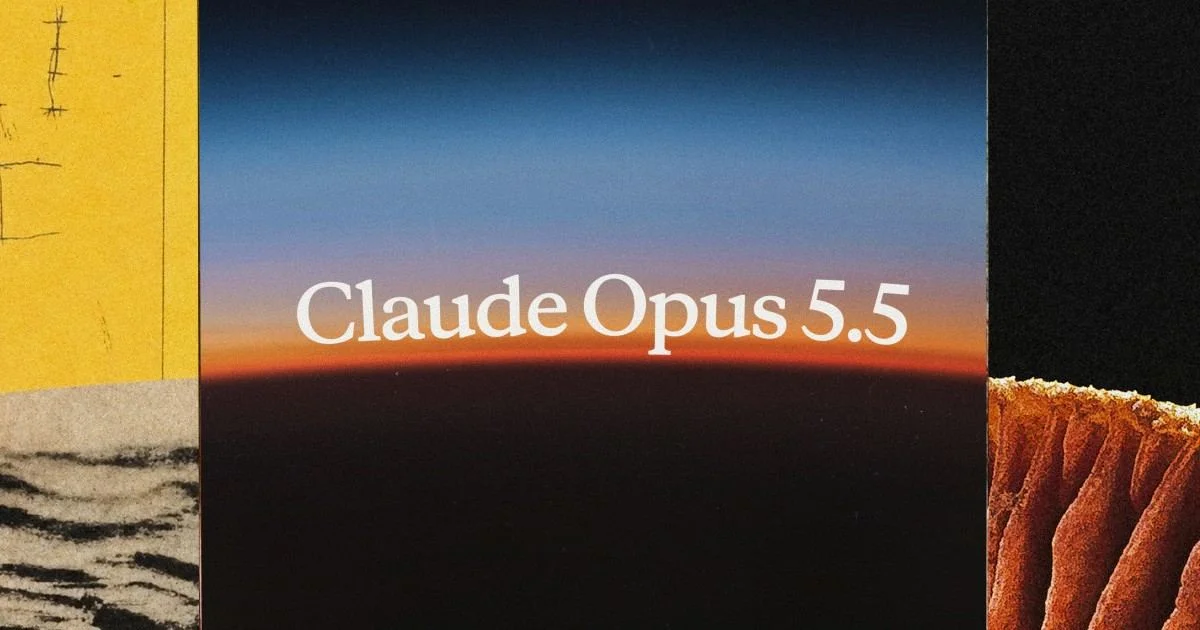
When a new AI model lands, the first question is usually “how smart is it?” For Claude Opus 5.5, a more useful question is this: how much does the same job cost, how long does it take, and how far can you trust the result? The real story of this release is efficiency, not raw intelligence. And it lands directly on the teams running your website, content and reporting.
What happened
On September 22, Anthropic introduced Claude Opus 5.5, the first model in its new Claude 5.5 family, with Sonnet 5.5 and Haiku 5.5 set to follow in the coming weeks. The headlines:
- Cost: Anthropic’s tests put it at 40% cheaper than Opus 5 on typical workloads at default settings. Input and output tokens now cost $4 and $20 per million, and cache reads, the biggest cost line in agentic and coding work, are 60% cheaper.
- Speed: It generates output more than 30% faster than Opus 5.
- Focus: On Anthropic’s benchmarks it leads in agentic coding, computer use (operating software interfaces the way a person would) and knowledge work.
- Security: Its resistance to prompt injection attacks is on par with or better than Opus 5 across all the scenarios Anthropic tested, from coding to web browsing.
- Access: Available on the Claude Platform as well as Amazon Web Services, Google Cloud and Microsoft Azure.
The announcement makes no claims about image or video generation. This is operations news, not creative-production news.
Agents take a seat at the web team’s desk
One example from the announcement speaks directly to web teams. Given the job of speeding up every page of a web app, Opus 5.5 got it right in 39 of 40 attempts, according to Anthropic, while Opus 5 made smaller gains and also changed how the app behaved.
For us, the second half of that sentence matters as much as the first. A performance fix is only worth something if nothing breaks along the way. A page that loads fast but can’t submit a form costs more than a slow one. That is exactly where agentic coding earns its keep: repetitive technical work spread across many pages, such as image optimization, meta tag audits, broken link checks and structured data validation, done with fewer human hours and more consistency.
At Klyne, we use AI agents in our own web development and content workflows. The pattern is clear. An agent is fast on a well-defined task. Defining the task well is still design and strategy work.
Content, reporting and SEO: the work gets cheaper, the decisions get more valuable
Two things about Opus 5.5 stand out for content and reporting. The first is writing style: Anthropic says the model puts the most important information up front, is less likely to use jargon and follows the writing rules you give it. The second is sourcing discipline. In an internal test, the model had to write a quarterly performance report from a copy of the web in which the company’s earnings release was tough to track down, and an automated grader checked every figure and quote against the sources. Across effort settings, Opus 5.5 produced 18 reports and 16 of them passed a quality bar where a single made-up figure or quote counted as a failure.
For brands, the takeaway is simple. The unit cost of monthly performance reports, competitor scans, multilingual page drafts and SEO audits is falling. Cheaper means you can run them more often. But frequency alone isn’t value. Someone still has to decide which page answers which search, and which content speaks in your brand’s voice.
Anthropic itself is cautious about benchmarks, noting that at this level “benchmark margins have become a less reliable guide to real-world differences.” The right yardstick is a pilot inside your own workflow.
What it means for your brand
What changes: The cost and time of repetitive digital work. Site maintenance, content updates, reporting and technical SEO checks can now run more regularly on smaller budgets.
What doesn’t: Strategy, brand direction, quality control and human sign-off. However resilient the model, every page and report that goes live needs a person who has read it and approved it. According to Anthropic, the model is much less likely than recent models to take hard-to-reverse actions or step outside the boundaries it’s given. That’s welcome. You are still the one who draws those boundaries.
Four steps we recommend:
- List the repetitive work. Pull together the technical and content tasks your team does by hand every month.
- Write the rules down. Tone, terminology, banned phrases, page templates. A model can only follow writing rules that exist.
- Add a sign-off point. The agent drafts, a human publishes. That line should be especially clear on your live site and in client-facing reports.
- Build a solid system. A site with clean components and a well-structured CMS is easier to run for people and agents alike. We design that structure from day one in our Webflow web design and product design and UI/UX projects.
We also looked at GPT-6 Sol and Luna, announced the same day, from a brand perspective.
FAQ
Does Claude Opus 5.5 generate images or video?
Anthropic’s announcement doesn’t mention image or video generation. The focus is agentic coding, computer use and knowledge work. Creative production still needs different tools and creative direction.
Can AI now run our website on its own?
It can speed up a large share of routine technical work. But why a page exists, how your brand voice is built and what goes live are human decisions. The best results come from a well-built site paired with a clear approval flow.
Where is it available?
According to Anthropic, the model is available on the Claude Platform, Amazon Web Services, Google Cloud and Microsoft Azure. As with previous Opus models, a zero data retention option is also available.
Let’s map out together where AI agents can speed up your digital operations and where human sign-off is non-negotiable. From your website to your content pipeline, end to end and under one roof: get in touch.
Sources
- Introducing Claude Opus 5.5 · Anthropic
- Newsroom · Anthropic