Instagram Content Protection Is Here: Find Copies of Your Videos
Instagram's content protection finds copies of your original videos across Instagram and Facebook. Here's how brands can use it to protect their video work.
On November 17, Instagram rolled out content protection, a tool that finds copies of original videos across Instagram and Facebook. Until now it was only available to creators on Facebook. If you’ve funded a brand film or Reels series and then found it on someone else’s account under someone else’s product, you can now track those copies.
How does Instagram’s content protection work?
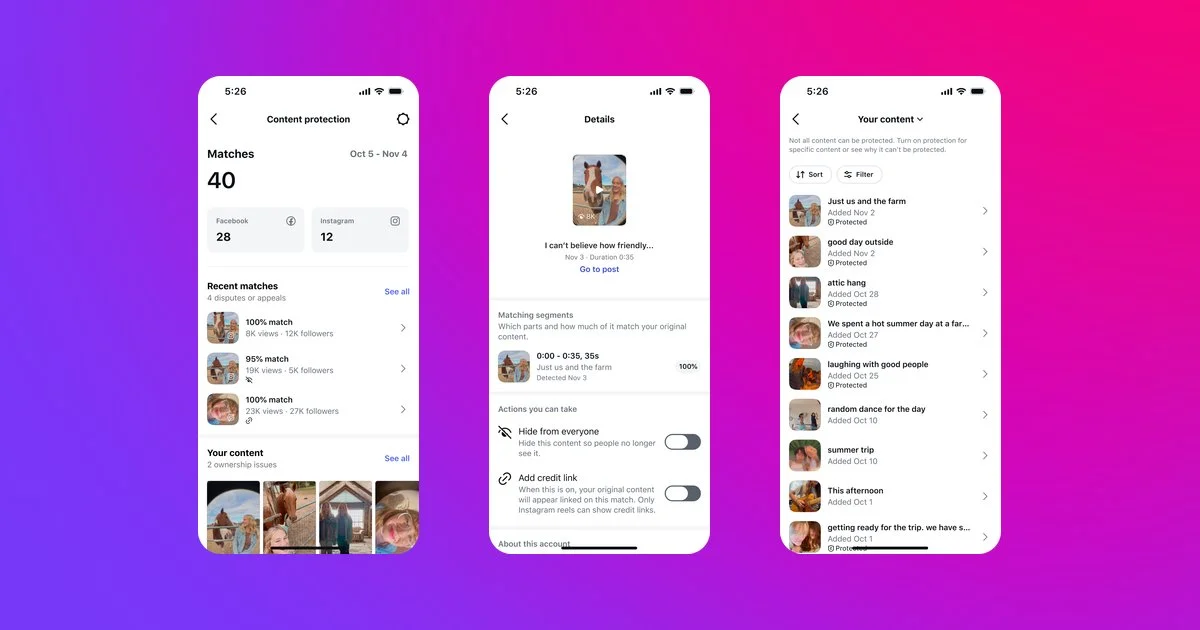
According to Instagram, content protection scans for visual matches of original videos from eligible accounts that enroll. It covers both Instagram and Facebook and uses the same matching technology as Meta’s Rights Manager. Once you enroll, every original video you post from then on is protected automatically, and you can add eligible older videos by selecting them manually.
When a match turns up, you get a notification. You can see how many views the match has and the follower count of the account that posted it, then choose one of four options. The default is to track the match and leave it visible. You can hide it from everyone on Instagram and Facebook; Instagram says this reduces the match’s reach without directly penalizing the other account. You can add an “original by” label to matches on Instagram, linking viewers back to your video or profile. Or you can release your claim and let the video stay up.
You can put accounts you’ve given permission to, such as a second profile, a creative collaborator or a brand, on an allow list. If another account posted and protected your video before you did, you can file an ownership dispute inside the tool or submit a copyright report.
Next, Instagram is starting to surface copies that reuse the spoken words of your original video even when the visuals have been replaced with AI; this will be tested with a small group of creators in the coming weeks. Instagram is also exploring ways to limit the reach of accounts that repeatedly post this kind of content.
Who can use it
Instagram says eligibility is largely based on its originality and integrity standards. If you qualify, you’ll see a notification in your activity feed, and you can check under Tools on the Home tab, in your professional tools. If you don’t have access, there’s an application form.
The announcement speaks to creators. It doesn’t say on what terms brand accounts qualify or which countries have access; the most reliable check is your own account’s dashboard.
What difference does it make for brand films and Reels?
Posting order matters here: if another account posts and protects your video before you do, you’ll need to file an ownership dispute. If your brand film goes live first on an influencer’s, a dealer’s or your agency’s account, that route is open to you, but it’s an avoidable hassle. If you post the original from your own account first and add partners to the allow list, the risk is gone from the start.
Not every copy is bad, either. A distributor sharing your product video may be exactly what you want; an unknown page using your film to sell a different product hurts your brand. The “original by” label turns the first kind of copy into a source of traffic back to you, while hiding is there for the second kind. The view and follower data in each match also shows where your content travels.
Once Instagram’s speech-based matching rolls out more widely, the words spoken in your video, meaning your script, become part of its fingerprint. Copies that swap the visuals for AI but keep your words will become catchable for the first time. For now, that feature is still in testing.
Does it catch copies on TikTok, YouTube or websites?
The tool only scans Instagram and Facebook; TikTok, YouTube and websites are outside its reach. Because it relies on visual matching, you shouldn’t expect it to catch content that was reshot in imitation of your video. Copyright reports and ownership disputes are still there, and content protection makes them easier to use.
How do you put campaign videos under protection?
- Check the Tools section of your brand account; if content protection isn’t there, fill in Instagram’s application form.
- Publish campaign videos from your own account first, and add your agency, influencers, dealers and secondary accounts to the allow list.
- Retroactively protect past campaign films and your most-watched videos.
- Keep master files, project files and first-publication dates organized. In an ownership dispute, they’re your strongest evidence.
Why plan video delivery together with the publishing plan?
In video production and motion graphics work, much of the value sits in the identity people recognize in the first few seconds. In our view, which account posts first and who’s on the allow list should be settled in the publishing plan before the video is finished.
FAQ
Is Instagram content protection available in Türkiye?
The announcement has no country list. If you see content protection under Tools on the Home tab, it’s switched on for your account.
Can brand accounts use it?
No separate criteria have been announced for brand accounts. If the tool doesn’t show up on your account, try the application form.
Does hiding a video penalize the account that posted it?
No; hiding reduces the match’s reach but doesn’t directly penalize the other account. If you want the video taken down, a copyright report is a separate route.
If you’d like us to write the first-posting account and the allow list into the publishing plan for your next campaign film, write to us.