Claude-Assisted Riemann Proof: Lean-Checked, Still Being Read
Levent Alpöge says he found a Riemann proof with Claude. Machines have checked it; humans are still reading it. What that means for trusting AI output.
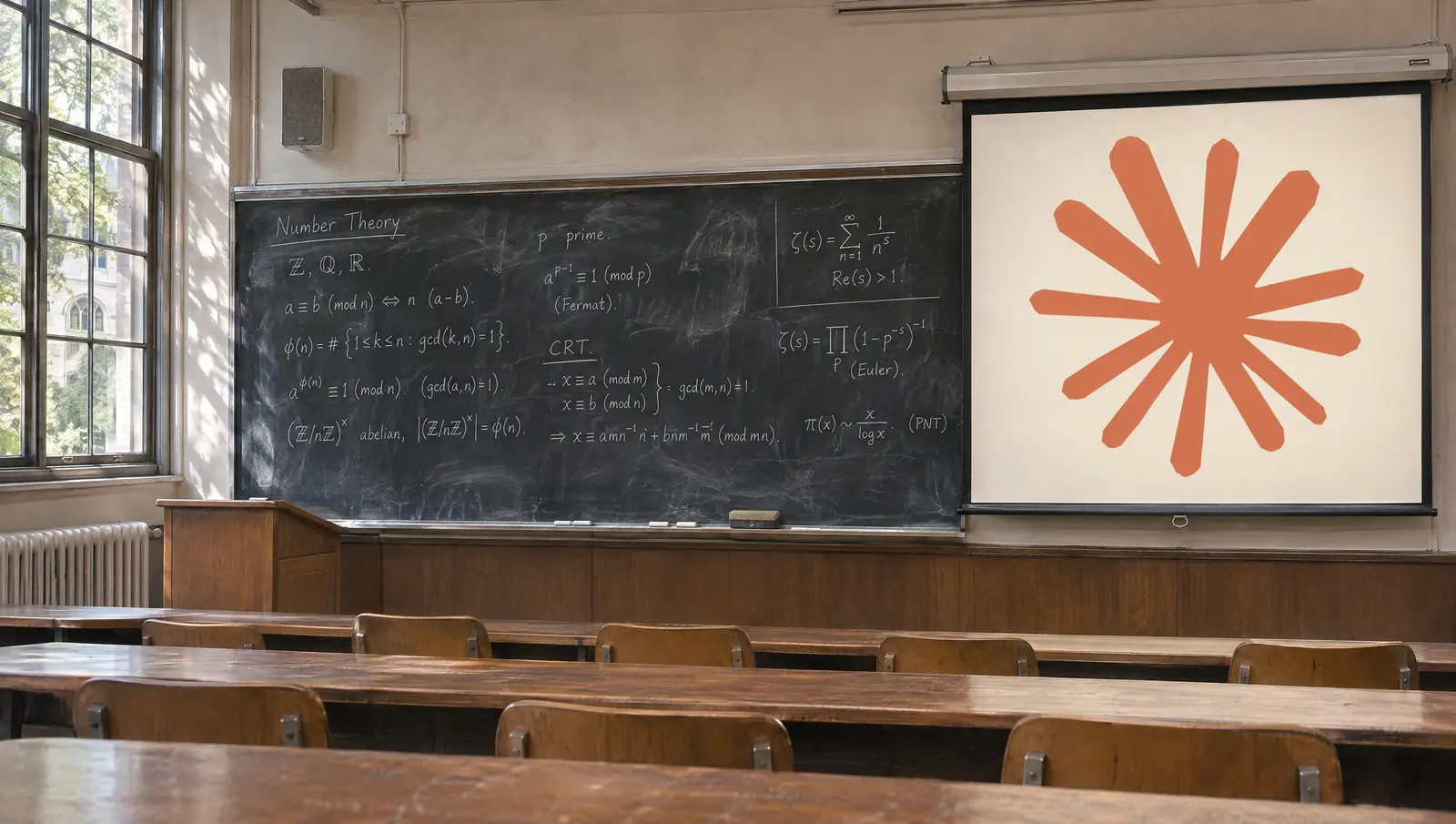
On November 20, Levent Alpöge posted a four-page note announcing that he had found a proof of the Riemann hypothesis, one of the most famous open problems in mathematics. Alpöge, a mathematician at Anthropic, says he found the pieces of the proof working with Claude. We’ll look at how the claim is being checked, because it bears on a question corporate teams ask often: how far can we trust AI’s work?
How was the Claude-assisted Riemann proof claim checked?
In his note, Alpöge writes, “I believe I have, working with Claude, discovered a proof,” and says the method extends to the generalized Riemann hypothesis. The proof is written in Lean, a language for checking mathematical proofs by computer. Instead of a paper, Alpöge released only the Lean code. He says posting an unreadable document didn’t feel right, and he plans to write the argument up properly. A footnote says the detailed text he and Claude generated ran past 250,000 pages.
According to TechCrunch, mathematicians including MIT’s Andrew Sutherland compiled the code on their own machines. The next day, Lean FRO and the Mathlib Initiative, the groups behind Lean and its main math library, published a joint statement: the roughly 17-million-line library compiled without errors for dozens of people, the proved theorem matches Mathlib’s statement of the Riemann hypothesis exactly, and the proof passed several independent checkers.
On November 25, a much shorter version produced by people at Anthropic working with Claude was posted; its readable edition is about 300,000 lines. Its README says it has passed machine checks only and no mathematician has read it through.
The same day as Alpöge’s note, a separate, entirely human-written proof proposal by Stanford’s Alessandro Masullo was announced on Ravi Vakil’s blog. In a November 22 update, Vakil wrote that several readers had found problems in that proof with the help of different AI models; he makes no claim about its correctness.
TechCrunch notes that Alpöge was uneasy about the timing, which came right after Anthropic became a public company. We covered the company’s pre-IPO financials in an earlier post.
A machine check and human understanding are different things
A Lean check is a strong guarantee: if a single step is wrong, the code won’t compile. But it answers a narrow question, whether the theorem is true given these definitions. Why it’s true is still open. Alpöge himself writes that in the parts where Claude was the expert, he is paraphrasing in an area he hasn’t mastered yet, and that he may need to revise some of those descriptions.
There are two separate jobs here. Machines have checked that the proof follows the rules; mathematicians are now working out what it says. We think that split is a useful guide for any team producing work with AI.
How should AI output be checked in brand work?
Mathematics has a referee like Lean. Brand work doesn’t. No tool can confirm with one command that an AI-written product description or a generated video frame is correct. So we ask a different question: what will check this output, and who?
In the Riemann case, trust came from other people compiling the code on their own machines and separate checkers reaching the same result. In your work, the equivalent is having someone other than the person who generated the content review it against criteria written in advance.
Automated checks cover part of the job. On a Webflow site, error-free code, a good page speed score and valid structured data are machine checks worth having. Whether the price on the page is current, whether a claim would hold up legally and whether the tone fits the brand are calls a person makes.
The Masullo case runs the other way: AI helped find problems in a human-written proof. On our AI animated film projects, AI speeds up production, while product accuracy, brand colors and whether the edit tells the story go through the team’s approval.
Does this result carry over to every field?
This doesn’t show that AI is equally reliable in every field. The proof came in one of the rare areas where a machine check is possible. Marketing copy, legal wording and brand decisions have no equivalent checker. Even then, as Alpöge openly says, the expert needs time to understand the output.
How do you set up a review process in your team?
- Split your AI outputs into what a machine can check and what needs human judgment. Code, links, structured data and page speed go in the first group; claims, prices, tone and visual consistency go in the second.
- Write down who approves each type of content. The person who generates it shouldn’t be the one who signs it off.
- Have a model read your team’s copy or pages as a second reader, and have a person assess whatever it flags.
- Don’t publish output you can’t explain. Alpöge, too, chose to share checkable code rather than an unreadable document.
FAQ
Has the Riemann hypothesis been solved?
The machine check is done, but there is no paper yet that explains the proof’s ideas in a form people can read and assess. Alpöge says he will write one; review by the mathematical community is ongoing.
Did Claude find the proof?
Alpöge describes a collaboration: he set the direction, and near the end Claude pulled ahead on the technical details. For now, his note is the only account of who did what.
How does this affect how our company uses AI?
Not directly. In practice the job stays the same: someone other than the person who generated the AI output signs it off.
If you’d like a checklist showing who approves what in your AI-made pages and videos, write to us.
Sources
- Remark · Levent Alpöge
- AI claimed a solution to the 167-year-old Riemann hypothesis — and a human did, too · TechCrunch
- Lean verification of the Riemann Hypothesis · Lean FRO and Mathlib Initiative
- grh-lean: A short Lean 4 proof of the Generalized Riemann Hypothesis · GitHub (lsernau)
- Hurried announcement: Alessandro Masullo GRH · Ravi Vakil